The Technical Writer’s New Role: Architecting Agentic Documentation Systems
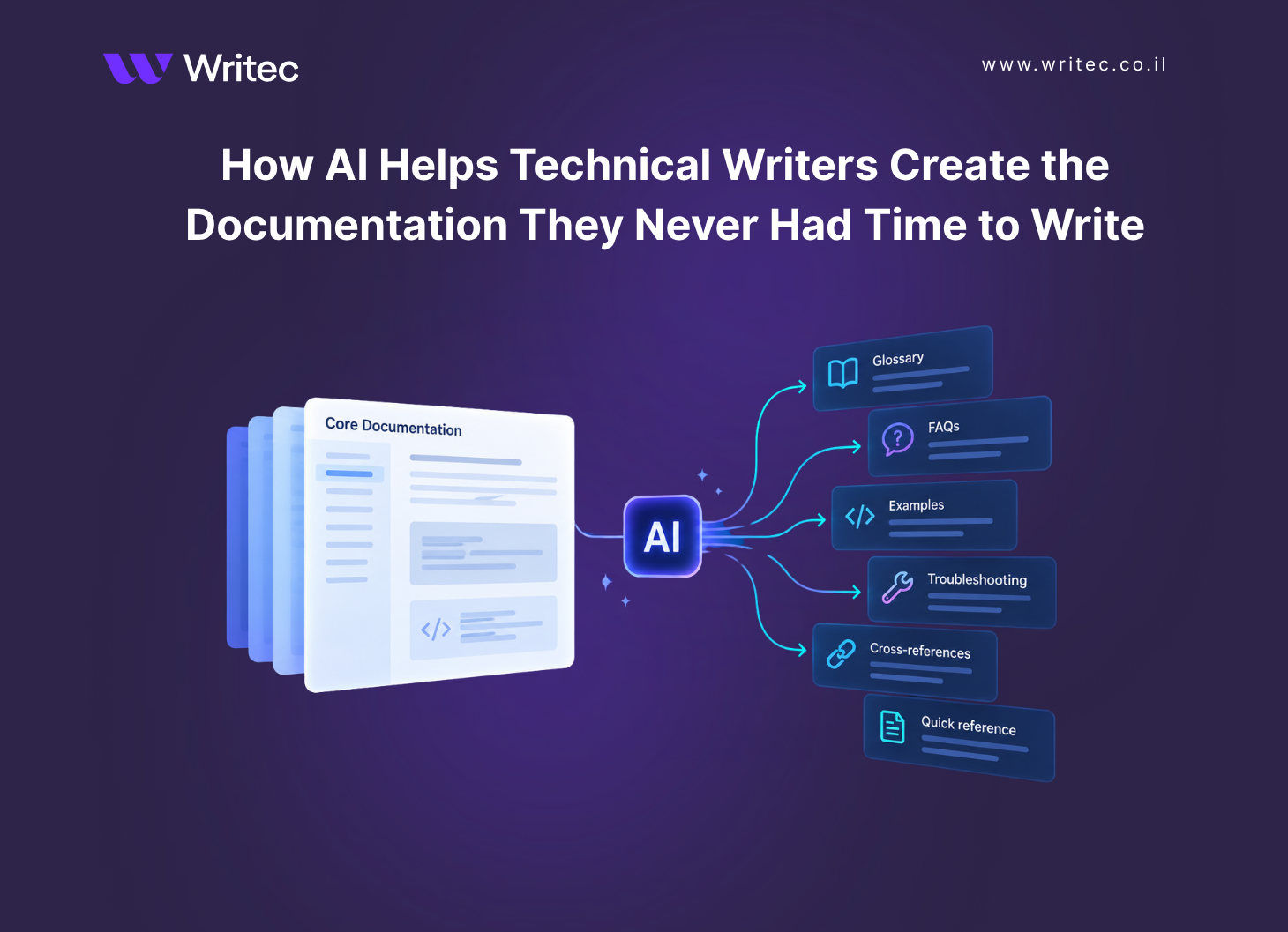
As software teams accelerate and AI becomes embedded in development workflows, documentation is expected to evolve at the same speed as code. This has led to a new paradigm. Documentation is no longer written. It is generated. And with that shift, the role of the technical writer may change completely.
From Writing Content to Designing Systems
In an agentic documentation pipeline, documentation is not created directly by humans. Instead, it is generated by AI agents that ingest product artifacts such as PRDs, API schemas, SDKs, and code repositories. These agents produce documentation continuously, triggered by changes in the system. At first glance, this might sound like the end of technical writing. In reality, it elevates the discipline.
Because while AI can generate text, it cannot define what good documentation looks like. It cannot decide how information should be structured, what relationships exist between concepts, or what level of detail is required for different audiences. These are not writing tasks. They are design decisions. The technical writer becomes the person who defines those decisions.
The Documentation Ontology: The Hidden Foundation
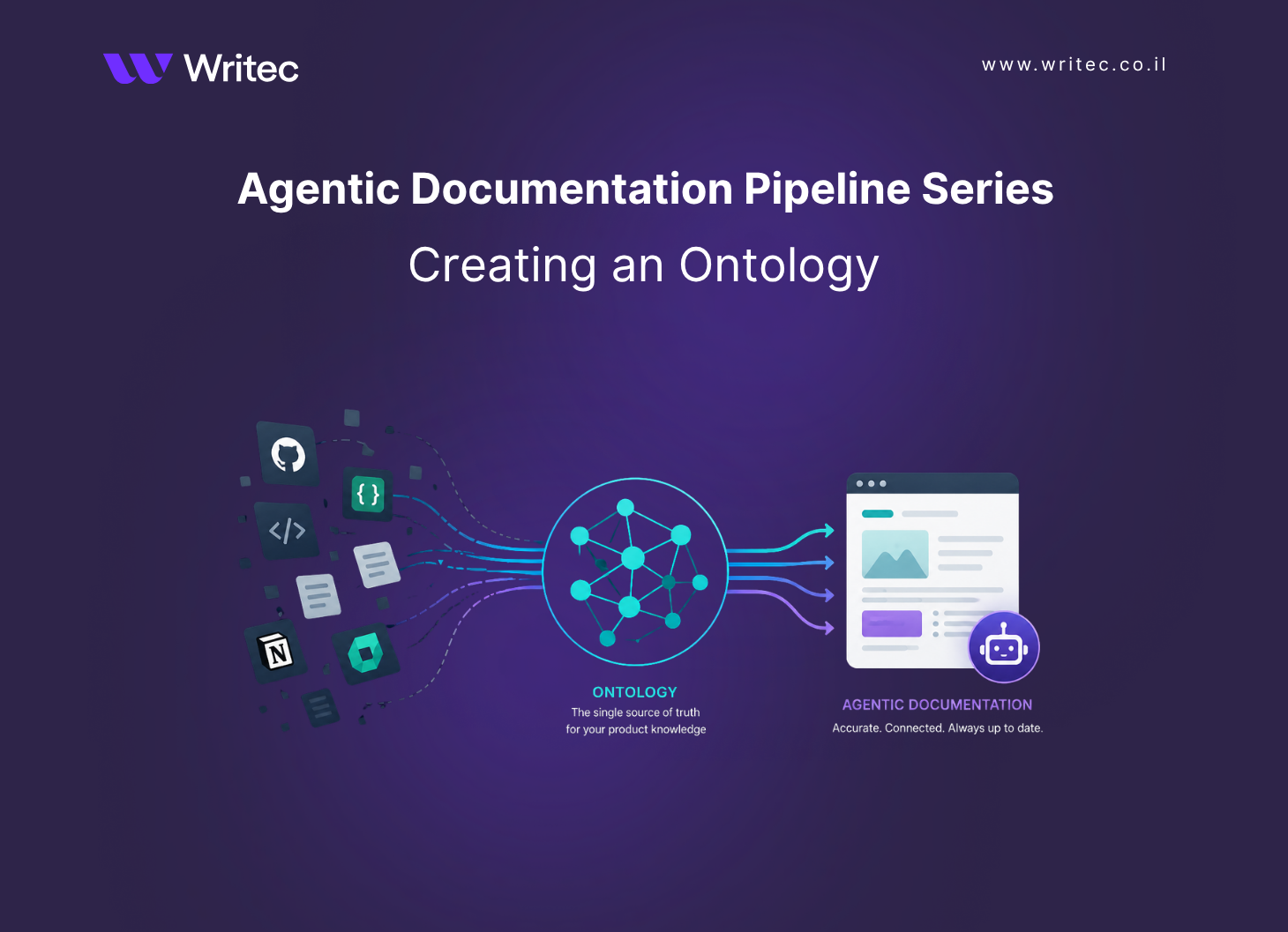
At the heart of every agentic documentation system lies a knowledge model, often referred to as a documentation ontology. This model defines the entities that make up the product, such as services, APIs, endpoints, SDK methods, and workflows, and the relationships between them. Without this structure, AI systems operate on unstructured text and produce inconsistent, unreliable results. With it, they can generate coherent, accurate documentation across an entire platform.
Designing this ontology is not an engineering task. It requires a deep understanding of how developers think, how products are used, and how information should be organized to support both learning and execution. This is precisely where technical writers bring unique value. In this sense, the writer is no longer documenting the system. They are modeling it.
Defining the Grammar of Documentation
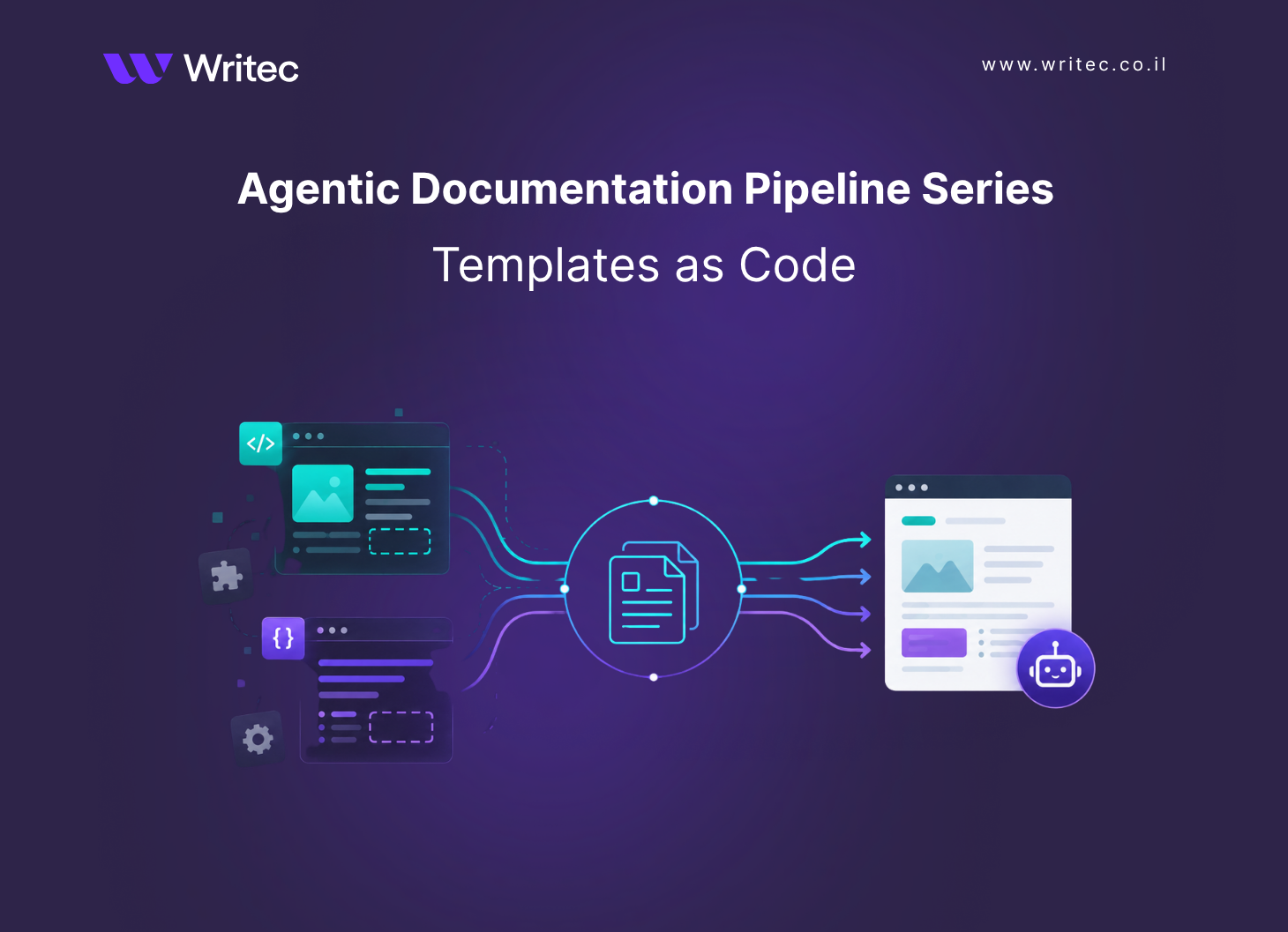
Once the knowledge model is in place, the next challenge is defining how documentation should be expressed. AI agents do not inherently understand what constitutes a complete API reference or a useful tutorial. They rely on explicit instructions. This is where documentation templates and rules come into play. A well-designed template for an API endpoint, for example, ensures that every generated page includes a clear purpose, authentication requirements, parameter descriptions, request and response examples, and error handling. These templates are not just formatting guidelines. They are constraints that shape the output of the AI system.
In addition, the technical writer defines the rules that govern quality. What makes documentation complete? When is an example considered valid? How should terminology be used consistently across the platform? These rules become part of the pipeline itself, enforced through automated validation and review processes.
Orchestrating Continuous Documentation
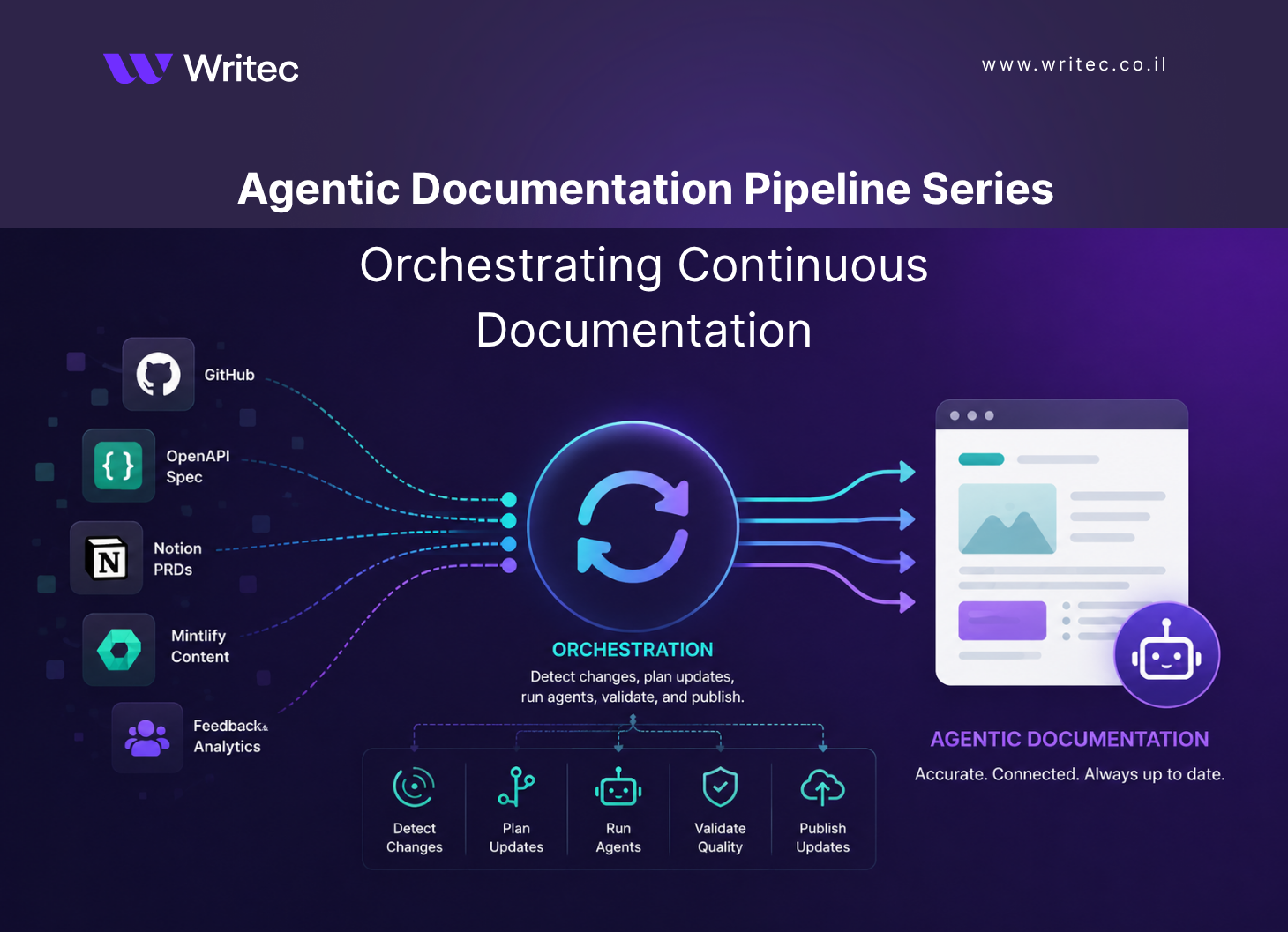
In an agentic pipeline, documentation is no longer static. It is continuously generated and updated as the product evolves. This introduces a new dimension to the technical writer’s role: lifecycle design.
When should documentation be regenerated? What triggers an update? How are changes validated before being published? What happens when the system produces conflicting or incomplete information? These questions are not solved by writing. They are solved by defining workflows.
The technical writer works alongside engineers to design the orchestration logic that governs the documentation pipeline. This includes defining generation triggers, validation steps, human review checkpoints, and publication rules. In effect, the writer becomes part of the system that produces documentation, rather than the last step in it.
The Human Layer Still Matters
Despite the rise of automation, human judgment remains essential.AI-generated documentation can be fast and comprehensive, but it is not inherently trustworthy. It requires oversight, especially in areas where nuance, context, or domain knowledge play a critical role.
The technical writer defines where human review is necessary and how it should be integrated into the pipeline. They determine which types of content can be fully automated and which require validation by developers or subject matter experts.
More importantly, they close the feedback loop. Insights from human review are used to refine templates, improve prompts, and adjust the underlying knowledge model. Over time, this iterative process increases the reliability of the system.
Conclusion
The technical writer who thrives in this new landscape will be one who embraces a fundamental shift in identity: from wordsmith to systems architect. The skills that made great writers valuable in the past, a precise understanding of the audience, a command of structure, and an instinct for clarity, do not disappear. They are redeployed. Instead of applying those skills sentence by sentence, writers now apply them at the level of systems, templates, and knowledge models that generate thousands of sentences automatically. The craft has not been diminished. It has been scaled.